


Defining Tactical Fitness
What do I mean when I refer to “Tactical Fitness,” anyway? What distinguishes it from any other fitness routine like bodybuilding, powerlifting, Crossfit, or other endurance sports?
First off, tactical fitness is not the silly stuff you see on YouTube. It’s not flipping tires while wearing a plate carrier and then shadow boxing to heavy metal. That’s just dumb.
Stew Smith, former Navy SEAL and long time fitness writer had this to say:
Tactical Fitness is not about workouts, it’s about work. It is not about working out to get good at working out, it is about creating programs that carry over into real life movements like lifts, carries, crawls, runs, rucks, swims, and mobility. Even analytical and creative thinking. It uses non-traditional equipment to lift and carry loads that are not equally balanced.
I like that definition.
Tactical Means General
Jeff Nichols, a former SEAL and current owner of Performance First US, put it succinctly when he said that, compared to sport specific training, tactical fitness has no clearly defined movement roles.
What does that mean? A tactical athlete has to be good at everything without putting too much emphasis on any one area. It’s a jack-of-all-trades mindset.
- Speed and Endurance – You need to be able to run, ruck, and sprint depending on the situation. You will continue doing this for hours to days if needed.
- Strength and Power – You need to be able to carry gear, drag or carry your buddy, pick yourself up over obstacles, or move things out of the way
- Flexibility and Mobility – You need to move over uneven terrain, without injury, drop into awkward or tight positions, and quickly get back out again to sprint to the next position
- Muscular Stamina – You’re going to have to exert muscular force again and again and again. Bad things don’t stop happening just because you’re tired.
It is very common for an advanced Tactical Athlete to be strong enough to do 20 pull-ups and deadlift two times his bodyweight of 200 or more pounds and still be able to run a six-minute mile pace for several miles. Those are excellent numbers, but a cross-country runner will beat you by a minute in a mile run, but likely fail at strength events. The strong man will almost double your lift weights, but take a bus when the mile run is tested.
Professional Athletes Are Too Specific
Think of a professional athlete in any sport. The reality is that they are probably a master in only one or two of these areas. Football players demonstrate immense amounts of power and force during repeated intervals. But the average player is only in motion for 11 minutes total during a four-hour game.
Basketball and soccer players move more than that at 3 miles and 7 miles respectively per game, but they don’t generate the power and force needed for football.
You get the idea.
A tactical fitness program means that you will not reach extremely high levels of fitness in any one area, but that you are very capable in all of them. It’s not just about strength, speed, endurance, or stamina– it’s everything.

Complicating Factors
There are several more characteristics to a tactical athlete that you need to consider. These things further separate them from other athletic pursuits found in the gym.
First, tactical athletes do not have seasons. There is no offseason where you can let yourself go a bit. Law Enforcement officers, for example, are on the job all the time. Any incident in the law enforcement world can rapidly escalate to life-threatening in a matter of seconds. If that’s your job, then you are always on your game.
Military members are similar. The life-threatening part may be for six months to a year at a time, depending on your job, but the rest of the year you are training or preparing for that deployment. Once you’re there, you are “game on” for six months to a year without stop.
The Burden of Constant Fitness
The need to maintain a high level of fitness all the time requires a lot of discipline and focus. It also means getting away from a purely goal-oriented mindset where you are training towards something.
Instead, you are training because that’s who you are.
Another factor is that the average tactical athlete is much older than the average professional athlete. Military members, law enforcement, and other first responders have careers spanning decades. They are much less tolerant of injury or downtime.
Not being able to work means not getting paid. Staying fit and strong without injury as you get older gets more difficult.
You need to train with these truths in mind:
- You’re not training towards a season or game, this is life
- You need to train in a way that’s sustainable for the duration of your life
So what does a Tactical Fitness Program Look Like?
From a fitness programming perspective, a tactical athlete’s fitness must cover a much more broad array of fitness demands…Their fitness demands are much more “multi-modal”. Green athletes, for example, need high relative strength (strength per bodyweight), high sprint-based work capacity, tactical agility, endurance (running/rucking) and chassis integrity (core). Most tactical athletes cannot predict the tactical situations they face, and thus their programming must be broader and embrace more fitness attributes than more narrow sport or competition athletes who can predict what they will face in competition, and program accordingly.
It’s Not About Big Muscles
Mass Is Not Always the Answer
More muscle mass is not always beneficial. Muscle mass means more metabolism byproducts to deal with. More muscle mass means you have a larger caloric demand, and in austere environments like that simply don’t support it.
In reality, it’s almost impossible to maintain a very large physique if you don’t have access to the number of calories you need to eat every day to maintain it.
Strength is important, but there are diminishing returns.
The Long Game
The simple truth is that you can’t do that to yourself all of the time, especially when you still have a job to do. If you can’t rescue your buddy because you had a killer leg day, then you have failed. If you destroyed your energy reserves so much that you can’t effectively train anymore, then you are wrong.

You can’t keep adding stress without end. Your body will only adapt to stimulation stress so quickly and for so long before it gets injured or worse.
Patience, You Must Have Patience
Fitness is not a linear progression. It like the stock market. It has ups and down, sometimes big downs, but the long-term progression is up.
That is, provided you planned for the long game and invested wisely.
Setting Standards
Before I talk about what a Tactical Program looks like, let’s talk about standards. What should a trained tactical athlete be able to achieve?
Most people think that a good place to start is a military fitness test. I totally understand why, but I also don’t think that’s a good path. From experience, the military fitness tests are not designed to test your capabilities. They are designed to weed out people who will become health problems.
Tactical Fitness Testing
| Lift | Men | Women |
| Front Squat | 1.5 x Bodyweight | 1.0 x Bodyweight |
| Deadlift | 2.0 x Bodyweight | 1.5 x Bodyweight |
| Bench Press | 1.5 x Bodyweight | 1.0 x Bodyweight |
| Push Press | 1.1 x Bodyweight | .7 x Bodyweight |
| Hang Squat Clean | 1.25 x Bodyweight | 1.0 x Bodyweight |
| Squat Clean + Press | 1.1 x Bodyweight | .7 x Bodyweight |
| Pull Ups | 16 | 8 |
What does that tell you? Tactical athletes need to be strong, but not elite.
Becoming elite means sacrificing in too many other areas.
Tactical Fitness Programming
Let’s talk about what a year-round program looks like for the tactical athlete.
If you’re looking to maintain a solid level of fitness across all the required areas, then you need to break that up into sections. You simply can’t work on all of it at the same time. Your body cannot adapt that quickly in all those different directions.
The professionals break up their training into periods throughout the year.

I asked the trainers about the biggest mistake most people make when it comes to their programs.
The answer: Not picking a program and sticking to it.
Beginners are especially bad about this because they have no context. Any untrained individual will see some very quick results no matter what training program they use. This is not because they are getting stronger or quicker in a matter of weeks. Instead, this is a neurological adaptation.
As a newbie starts exercising, the brain and nervous system look for ways to be more efficient. The body learns to recruit muscle fibers more efficiently, which helps the newbie lift more weight. That rate of progress is not sustainable in the long term.
As a beginner hits the plateau, where the gains come from from the slow process of muscle growth and adaptation, they get frustrated. Beginners then quit the program and look for the next new thing to work on. Maybe that new thing brings some quick gains, but they will eventually run into the same problem.
The key for beginners is to pick a program and start working. Stay on the program until it ends, and then start over or pick a new one. Always stick to a program.
They randomly pick movements and exercises and call it a workout. If you pick random workouts over time, you have random results. That’s not going to work, either.
Trust the professionals here, and pick a qualified program to follow.
It’s not just about being tactical.
Look, here’s the bottom line. Tactical Fitness is a buzzword.
This whole idea is about adopting a year-round fitness program that continually improves all areas of your physical capabilities. Moreover, it’s about doing it without a particular goal in mind. This isn’t really about being “tactical,” it’s about being a healthy human.
I simply cannot stand the idea of being like some of my relatives who ignored their bodies for decades, and now they struggle with seemingly simple physical tasks. Someday, I want to be the old guy who can still run around the playground with the grandkids (hopefully). I want to be the epitome of the “badass old man” that you don’t want to mess with.
But that doesn’t start as you get older. That starts with a proper strength and conditioning program right now, or last year, or ten years ago.
You need to have patience and discipline. Pick a program, start it, and just keep showing up.
Tactical Fitness: 5 Favorite Exercises
If I had to choose between five exercises of any type, I think I would go with an arrangement that truly works every part of my body. I would break this into a PUSH, PULL, FULLBODY, LEGS, and CORE exercise list or combo of two or more.
So, I would select the following:
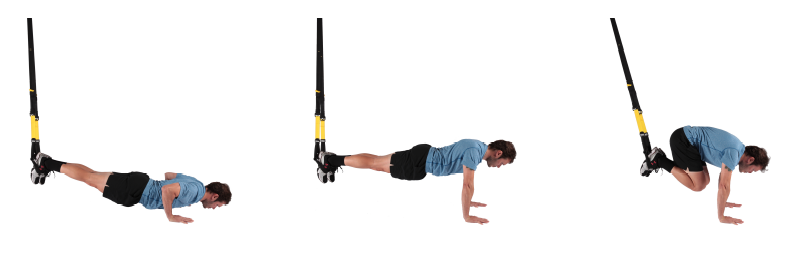
Push & Core – TRX Atomic Pushups
The bench press is a great lift, but after a good decade now of adding in suspension training into my program, I had to give the chest, shoulders, triceps, and core exercise to the TRX Pushup. The TRX makes the pushup twice as hard, and with the added knee up in between pushup repetitions completes this hardcore core exercise.
Pull – Pullups
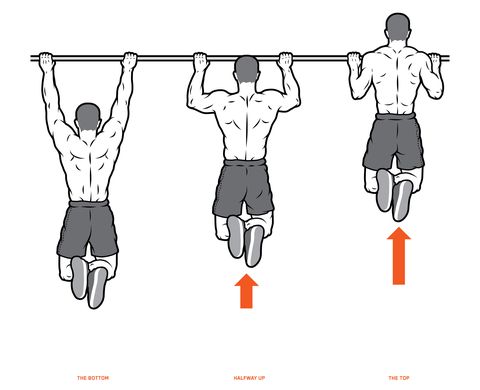
The heavy weight exercise of the calisthenics world is the pullup! If you can master this exercise you will build the needed strength for pulling your body weight over walls and up ropes. This is a great exercise for your grip, biceps, and upper back side of your body. Keeping an ability to do 20+ pullups in one set and do 100 reps in a single workout has always been a goal of my workouts. Grip variations make this exercise near endless as you can go wide, close, alternating, use a rope, and reverser grip to name a few variations.
Full – Dead Lift
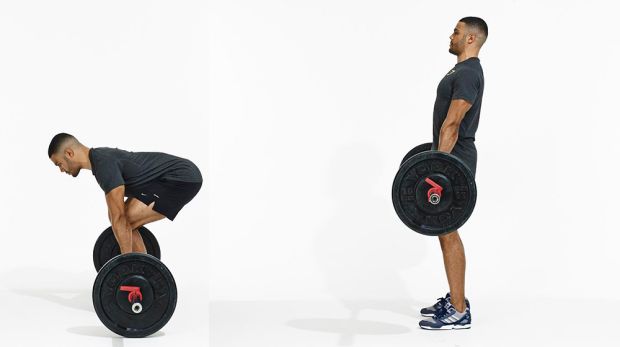
Lifting things properly is about as functional as you can get. Practicing this exercise regularly will insure your ability to lift and carry equipment and gear when needed. This also works the grip, legs, glutes, and lower back and works them in motion under strain. Plus, it is fun to get into heavy lifting mode during certain cycles of the year with this exercise.
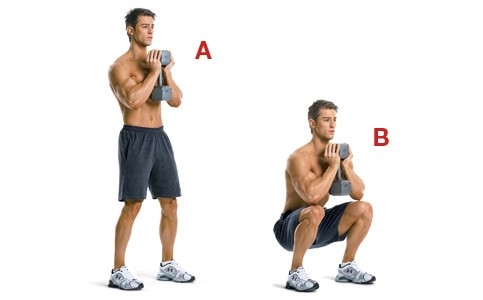
Legs & Core – Front Squat
For a true leg workout, I find the front squat more useful than the back squat as it has versatility in helping to improve other lifts like hang clean, power clean, etc. You might not be able to do as much weight as the back squat, but if moderately heavy lifting is your thing, this will work. Variations include overhead squats for more shoulder girdle and core addition.
Core – Plank
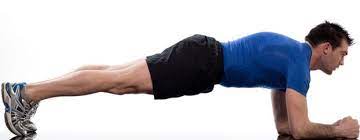
For the king of the isometric exercises, go with the plank. This is a great exercise that works the entire core (not just abs). You will challenge the shoulder girdle, spinal muscles, hips, and legs with this exercise. Build up to 5 minutes or more with dozens of variations. See a few variations.
Limiting any routine to just five exercises is not very realistic, but looking at this question, I would have to say these are my favorites. Here is how I would arrange these mixed with cardio days:
| Mon / Thurs | Tues / Fri | Wed | Sat |
| Upper bodyPull – Push / core – Pyramid PTFollowed by cardio of running or swimming | Lower / Fullbody exercises:5 x 5Front SquatsDead liftsFollowed by ruck or swim with fins | Sprints / AgilityCardio(shuttle runs / 300-400m sprints plus:Running goal pace – focusing on mile pace workoutsSwim or bike cooldown | Max Rep PT:100 Pullups200 TRX push300 seconds of plank poseCardioRun 2 miles– Ruck 2 miles- Swim 1000m with fins |
There are many ways to arrange these five exercises. Another common way would be to do all of them every other day versus the split routine above. Make the days in between a variety of cardio options from speed and agility days, goal mile pace running, swimming, swimming with fins, or a variety of non-impact cardio options like rowing, biking, elliptical training.
.