


COMBAT MINDSET -2
means that is missing the mindset, the warrior mindset. This is the most important aspect when we talk about combat, more important than how good you shoot or how good you are with the knife. You can be the best in your training or in relax mode if you cannot react fast and efficient in a real situation, all your training doesn’t matter.
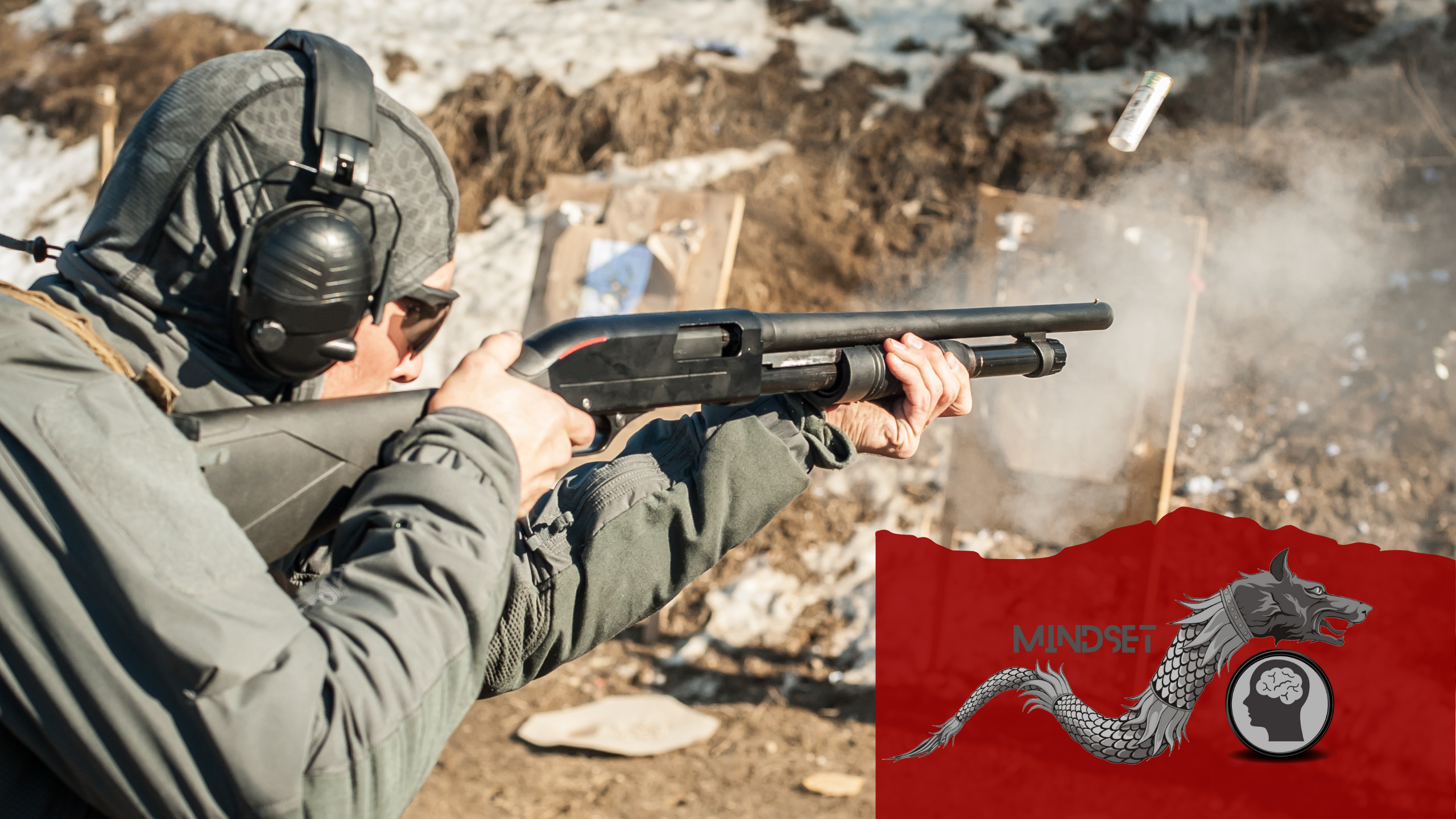
- Mindset towards a threat. This is the easier of the two ideas to explain and is simply the willingness to do whatever is needed to win the fight. Words matter – we want to win the fight. It is not enough that we survive the encounter; we must strive to completely dominate it.
- Mindset towards training. This is a more difficult concept to convey. It is made up of the discipline and commitment to seek out quality training and subsequently engage in the proper practice of fundamental technique at all times. Manipulations and techniques must be performed consistently, all of the time. This constant, consistent repetition will lead to the ability to properly run the gun or use the knife under times of extreme stress, the kind of stress that might be encountered in, say, a gunfight or knife attack. We need to remember that, in a critical incident; a person will not rise to the occasion but rather will default to their level of training. By striving to manipulate the gun or the knife in the same way, you can develop “unconscious competence” or the ability to perform necessary actions reflexively under stress without conscious thought.Building the Mindset
Teaching someone to have a proper mindset is difficult in the extreme. A frequent topic of discussion amongst my fellow instructors is, if such a thing can even be accomplished, how does one best go about doing do. My feeling is that it must be explained and then shown by example. There are, however, several elements that are necessary and which will always be present in the fighting mindset.
The first element of a proper mindset is to seek out a proper foundation. The internet is, for the most part, not the best place to find “training.” As convenient as online surfing may be, so much of the available information is improperly explained or demonstrated, or is just outright wrong. Of course you can find also very good quality content but you must be able to identify and to select the good information.The best opportunities for learning will come from attending a class with a vetted instructor. Select your teachers carefully and do not be afraid to ask questions. Look for an instructor who can explain what they teach and who will demonstrate the lessons. Check your ego at the door and be willing to learn.
In class, keep an open mind but don’t be afraid to ask questions. A good instructor will be able to back up what they teach and will strive to make sure information is flowing in both directions. I tell my students that “this is your class, not my class.” None of us know everything and everyone is capable of learning. We just have to be willing to invest our time and money into the process. Be willing to evolve. New information is constantly coming available. Avoid the latest fad; find what works for you and your environment. Evaluate your technique as you progress. As one’s abilities increase, so does one’s frame of reference and capacity for understanding. As a long time practitioner of Aikido, I experienced many instances where I was told something by my teacher that I simply wasn’t ready to hear. It wasn’t until later in my development that I was able to understand and incorporate the lesson into my practice.
The second element is to practice proper technique in a consistent manner. There is no single class out there that one can attend and emerge a gunfighter. Training is a journey, not a destination. Whether the training is beneficial or detrimental depends on the mindset and discipline of the individual. Bruce Lee is often quoted as saying “I fear not the man who has practiced 10,000 kicks once, but I fear the man who had practiced one kick 10,000 times.” Keep it simple and efficient. The skill must be consistently performed in order for it to become an accessible habit. Inconsistent repetitions are wasted repetitions. Worse, incorrect repetitions can build bad habits and produce training scars with deadly results. In order for our training to be beneficial and assist in building reflexive habit, it must be consistently executed and proper in its methodology. In other words, we have to practice the right techniques the proper way. The old adage that “Practice makes perfect” is a vicious lie; perfect practice makes perfect, practice alone only makes permanent.Another element is one of applicability. Everything is fundamentals. As students progress up the ladder of skill, they discover that “advanced” training is nothing more than the fundamentals applied at speed and under stress. However, too many students confine themselves to the square range and never avail themselves of the opportunity to apply their skills to different environments and situations.
As an individual’s command of the fundamentals increases, we need to start pushing the limits of our comfort zone, in terms of speed and complexity, and ultimately begin to apply the fundamentals to realistic scenarios.
The fighting mindset is a critical part of training.